Cooking Ingredient Substitutions
When you’re in the kitchen and the pantry runs low, knowing how to swap ingredients can save a meal. The key is to understand why an ingredient is in the recipe—does it add flavor, texture, or chemical leavening? By matching the role of the missing component, you can choose a substitute that keeps the dish on track. This guide breaks down the most common substitutions, explains when a flavor swap is enough, and shows how to handle the more delicate chemistry of baking.
Understanding Ingredient Roles
Every ingredient in a recipe has a purpose. Recognizing that purpose lets you pick a replacement that will perform the same function.
Flavor
Flavor ingredients—like herbs, spices, or citrus—primarily influence taste. Swapping one for another is usually safe as long as the new flavor profile fits the dish.
Texture
Texture ingredients—such as eggs, yogurt, or mashed fruit—affect the mouthfeel and structure. Replacing them often requires a different technique or an additional binding agent.
Structure
Structure ingredients—like flour, starch, or gelatin—create the framework of a dish. Changing these can alter the final product’s consistency dramatically.
Flavor Swaps vs. Chemistry Swaps
Distinguishing between flavor and chemistry swaps helps avoid surprises.
Flavor Swaps
Flavor swaps are straightforward: you replace a strong-tasting ingredient with something that has a similar profile. For example, fresh basil can often be replaced with dried basil, and a splash of soy sauce can be substituted with tamari for a gluten‑free option.
Chemistry Swaps
Chemistry swaps involve ingredients that perform a physical or chemical role—such as leavening agents or emulsifiers. These substitutions are more complex and can affect rise, spread, or stability.
Common Substitutions in Everyday Cooking
- Milk → Almond milk, soy milk, oat milk, or water with a splash of lemon juice (for acidity).
- Butter → Vegetable oil, coconut oil, or applesauce (for baked goods).
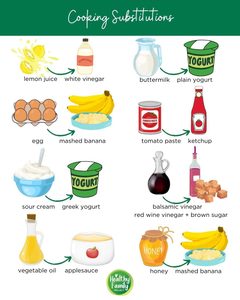
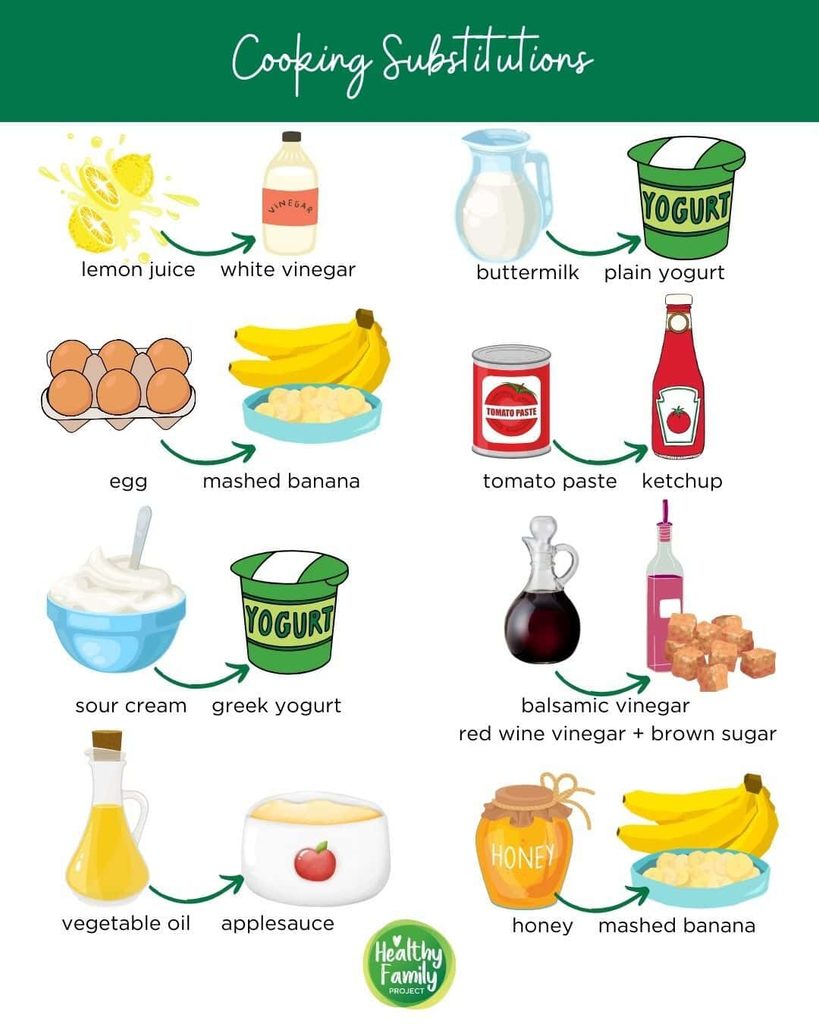
- Eggs → Mashed banana, unsweetened applesauce, or commercial egg replacer for baking; chia or flaxseed gel for binding.
- White sugar → Honey, maple syrup, or agave nectar (adjust liquid content).
- All-purpose flour → Whole‑wheat flour, oat flour, or a gluten‑free blend (use equal weight).
- Yeast → Active dry yeast, instant yeast, or a combination of baking powder and baking soda for quick breads.
- Olive oil → Canola oil, sunflower oil, or avocado oil for neutral flavor.
- Red wine → Dry white wine, apple cider vinegar diluted with water, or broth.
- Chicken broth → Vegetable broth, beef broth, or water with bouillon cube.
- Cheddar cheese → Monterey Jack, Colby, or a plant‑based cheese alternative.
Baking: The Chemistry of Substitutions
Baking is a science. Small changes can lead to big differences in rise, crumb, and flavor. Below are common baking substitutions and the science behind them.
Leavening Agents
- Baking soda → Use 1/4 teaspoon baking soda for every 1 teaspoon baking powder. Add an acid (buttermilk, yogurt, or vinegar) to activate.
- Baking powder → Replace with 1.5 teaspoons baking soda plus 1 teaspoon cream of tartar.
- Yeast → For quick breads, use baking powder or baking soda; for pastries, use a combination of butter and flour to create layers.
Flour Types
- All‑purpose flour → Use a gluten‑free blend for cakes; add xanthan gum (1/2 teaspoon per cup) to improve structure.
- Whole‑wheat flour → Replace 1/4 to 1/2 cup of all‑purpose flour with whole‑wheat for added fiber; adjust liquid by 1–2 tablespoons.
- Almond flour → Use for low‑carb recipes; add 1 tablespoon of cornstarch per cup to mimic gluten.
Fats
- Butter → Use an equal weight of margarine or shortening for texture; for flavor, add a teaspoon of vanilla or almond extract.
- Oil → Replace with melted butter (same volume) for richer flavor; use neutral oil for delicate pastries.
- Ghee → Use clarified butter or a butter‑oil blend for high‑heat cooking.
Tips for Successful Substitutions
- Start with small batches to test the outcome.
- Match the moisture level; dry substitutes often need added liquid.
- Consider the pH; acidic ingredients can react with baking soda.
- Adjust baking time and temperature when changing fat or flour types.
- Read the recipe’s intent—some dishes rely on the exact texture of an ingredient.
- Use a conversion chart for precise measurements.
Safety Considerations
When substituting, keep food safety in mind. Raw eggs can carry salmonella; use pasteurized eggs or alternatives. Some plant‑based milks are not pasteurized and may need refrigeration. Always check the shelf life of substitutes, especially when using fresh produce or dairy alternatives.
In summary, cooking ingredient substitutions are a practical skill that can keep meals on track when the pantry runs low. By understanding the role of each ingredient and applying the right type of swap—flavor or chemistry—you can maintain both safety and quality in your dishes.